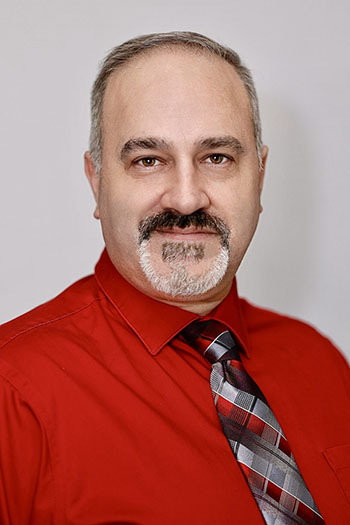
Dr. Charles Foat, an esteemed figure in Emergency Medical Services (EMS), currently serves as the Program Director of Emergency Medical Sciences at Johnson County Community College. With an impressive educational background, including a Ph.D. in Instructional Design and a Master’s degree in Educational Technology, Dr. Foat merges his academic expertise with extensive field experience.
His journey in EMS spans over three decades, beginning with his service as a Hospital Corpsman and Field Medical Service Medical Technician with the U.S. Navy. He is a Nationally Registered Paramedic, as well as EMS Instructor showcasing his dual proficiency in both practical and instructional aspects of emergency medical services. Dr. Foat’s career has seen him in varied roles, from a field paramedic, educator, Clinical Manager, Regional Director, Professor, and Program Director, across several states, including California, Wisconsin, Iowa, Missouri, Texas, and Kansas.
Dr. Foat’s contributions to EMS education are profound. He has taught a wide range of EMS courses, from entry-level to advanced paramedic classes, and has provided education to medical professionals at all levels, including physicians and nurses. His international teaching experiences further underscore his commitment to global EMS education.
As a visionary in EMS education, Dr. Foat has led numerous research projects; he is also a Section Editor and peer reviewer for the International Journal of Paramedicine, contributing significantly to the body of EMS knowledge. His commitment to the EMS community extends beyond education and research. Dr. Foat is an active member of several professional organizations, including the National Association of EMS Physicians, the National EMS Management Association, and others. As a Fellow of the Academy of EMS (FAEMS), Dr. Foat has been recognized for his significant contributions to the National Association of EMS Physicians, the EMS profession, and the advancement of EMS as a vital subspecialty.
Dr. Foat’s dedication to creating an engaging, student-centered learning environment, coupled with his focus on evidence-based instruction, positions him as a pioneer in EMS education. His efforts not only prepare his students for successful careers but also ensure the advancement of EMS practices through his comprehensive and forward-thinking approach.